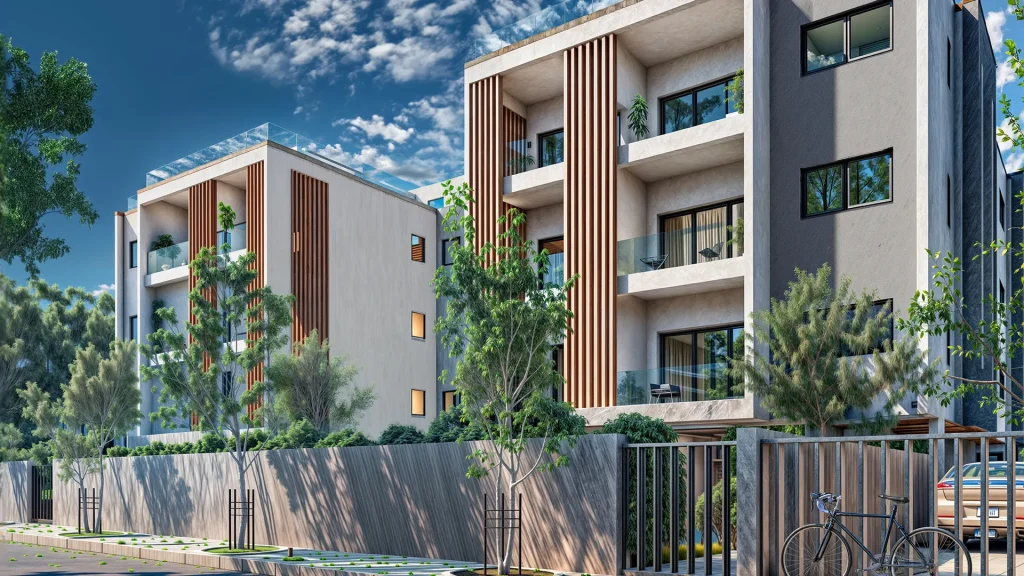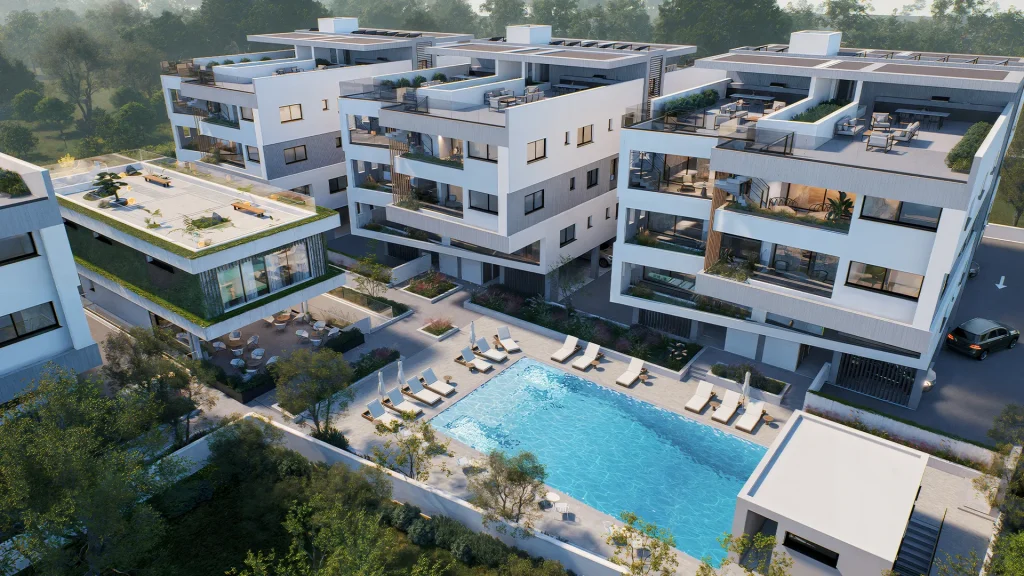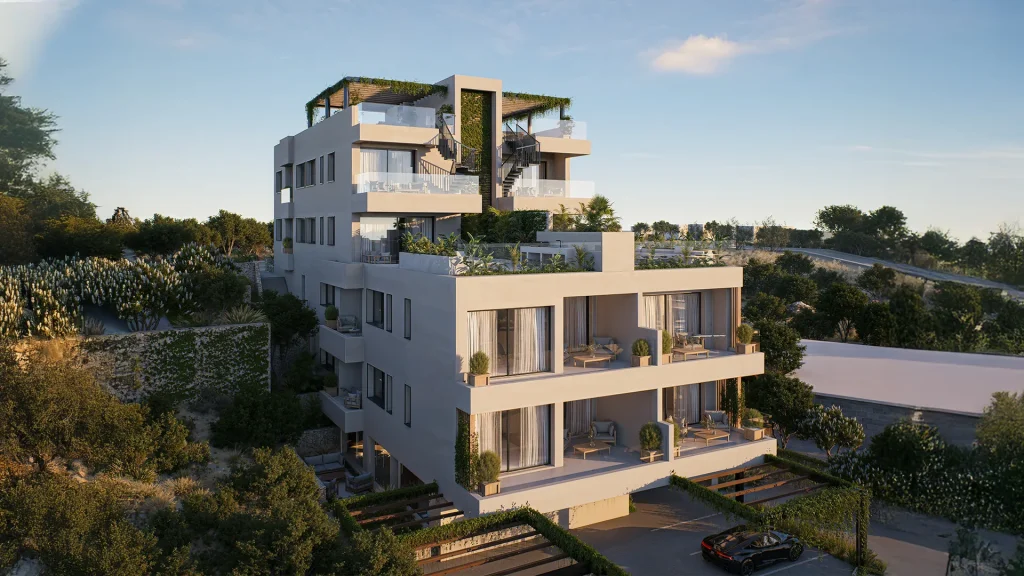
The best neighbourhoods in Paphos for real estate investment depend on the tenants a property should attract. Kato Paphos and Coral Bay serve holiday guests. Geroskipou, Universal, Konia and Emba draw long-term tenants who live in Paphos all year. Chloraka and Kissonerga sit in between, close to the sea but with a larger resident base than the resort zones.
Official statistics on property prices and rents in Cyprus are published for districts or for the country as a whole, not for individual neighbourhoods. The most useful official figure at neighbourhood level comes from the 2021 Census of the Cyprus Statistical Service (CYSTAT), which shows how many homes in each community are someone’s usual residence. In Geroskipou the share was 76.9%. In Peyia, the municipality that includes Coral Bay, it was 36.7%, so most homes there stood empty or were used for only part of the year.
That difference shapes rental demand, seasonality and resale, and it runs through every area profile below. Whether it makes sense to invest in Paphos at all is assessed in the article on whether Paphos is a good place to invest in real estate. The main rental strategies, with a gross and net yield calculation, are explained in the guide to Paphos real estate prices and investment.
How Do Paphos Neighbourhoods Compare for Investors?
The table below sets the main investment areas of Paphos side by side, using the 2021 census share of homes that serve as someone’s usual residence as the measure of year-round demand. Across Paphos district the share was 52.8%, well below the national figure of 72.0%, because holiday homes make up a large part of the local housing stock.
| Area | Homes used as a usual residence (2021) | Location | Main rental demand | Strategy it typically fits |
|---|---|---|---|---|
| Kato Paphos | 60.3%* | Seafront, harbour and archaeological park | Holiday guests | Short-term lets |
| Universal | 60.3%* | 2.5 km from the town centre | Long-term tenants, some holiday guests | Long-term lets |
| Geroskipou | 76.9% | 3.8 km east of the centre, with its own coastline | Long-term tenants | Long-term lets |
| Chloraka | 51.1% | 5.2 km north, on the coast | Mixed | Short- and long-term lets |
| Kissonerga | 52.3% | 6.6 km north, beside Potima Bay | Mixed | Short- and long-term lets |
| Peyia and Coral Bay | 36.7% | 14.4 km north-west | Holiday guests and second-home owners | Short-term lets |
| Tala | 46.1% | 8.4 km north, in the hills | Second-home owners and permanent residents | Larger homes, longer holding periods |
| Konia | 70.5% | 4.2 km inland | Long-term tenants | Long-term lets |
| Emba | 74.0% | 4.2 km inland | Long-term tenants | Long-term lets |
*Kato Paphos and Universal both belong to the Municipality of Paphos, for which the census reports a single figure. Distances are by road from Kennedy Square. Source: CYSTAT, Census of Population and Housing 2021.
A high share means most homes are lived in all year, which supports steady long-term rentals and a resale market made up of local buyers as well as foreigners. A low share points to a holiday-home market, where income follows the tourist season and resale depends more on international demand.
Kato Paphos
Kato Paphos is the part of town most closely tied to tourism, and property there is usually bought with holiday lets in mind. The area stretches along the seafront around the harbour and the Archaeological Park, listed as a UNESCO World Heritage Site since 1980, and it holds most of the hotels, restaurants and beach facilities in Paphos. The strip along Tombs of the Kings Avenue towards Chloraka has a similar mix of hotels and holiday apartments.
Rental income follows the tourist season. Occupancy peaks in summer and drops in winter, so the annual return depends on how many weeks a property can be let outside the busiest months. Every home let to tourists must first be entered in the registry of the Deputy Ministry of Tourism, and its registration number has to appear in every advertisement, including listings on booking platforms.
New building near the ancient sites is limited. As UNESCO notes, the Cyprus Antiquities Law allows controlled areas to be set around archaeological sites, which restricts development close to them. Scarce new supply along the seafront helps resale values hold, although buyers here usually pay more than in the inland communities. Demand for resale comes largely from abroad, so it moves with international interest in Cyprus as a whole.
Universal
Universal is a residential district between the town centre and the tourist zone, and its rental market draws on both. It lies about 2.5 km from the centre of Paphos, with Kato Paphos and the seafront a short drive away. Most of its housing is apartment blocks and townhouses, a type of stock that suits tenants who live in Paphos all year as well as visitors on longer stays.
That mix makes rental income less dependent on the summer season than in Kato Paphos. Long-term tenants include local households and people working in the town. Everyday services are close by: Iasis Private Hospital is under a kilometre away and Kings Avenue Mall about 2.4 km. How Universal compares with other areas for families relocating to Paphos, an important group of long-term tenants, is covered in the guide to the best areas in Paphos for families.
Asking prices in Universal usually sit between the seafront and the inland communities. Because apartments here appeal to residents, renters and foreign buyers alike, an owner who decides to sell is not relying on a single group of buyers.
Geroskipou
Geroskipou has the strongest year-round character of the areas in this guide: according to the 2021 census, 3,067 of its 3,989 homes were someone’s usual residence, a share of 76.9%. Demand for rentals comes mainly from people who live and work in the district rather than from tourists, which keeps occupancy steadier through the winter months.
The municipality lies about 3.8 km east of the town centre and has its own stretch of coastline. NEON Mall is around 2.3 km away, Paphos General Hospital 4.5 km and Paphos International Airport roughly 11 km, distances that matter to tenants who commute or travel often. Its residential areas have grown steadily over recent years, with most of the new building aimed at permanent residents rather than holiday use.
For an investor, this profile points to long-term lets and a gradual approach to capital growth rather than high seasonal income. The town’s history, character and recent development are described in more detail in the article on Geroskipou as a place to buy property.
Chloraka
Chloraka offers coastal living at a lower price point than the Kato Paphos seafront, and its rental market sits between the resort zone and the residential suburbs. The village lies about 5.2 km north of the town centre, directly on the coast, and the 2021 census recorded 51.1% of its 4,827 homes as someone’s usual residence. Roughly half the housing is lived in all year and the other half is used as holiday or second homes, so a property here can be let to tourists in summer or to long-term tenants, depending on the owner’s plan.
Development has been more selective than along the main tourist strip, and the local services serve residents as well as visitors. The Aspire International School is about 2.4 km away, which matters to families renting long term. How returns in coastal villages like Chloraka compare with national yield figures is set out in the overview of Cyprus property investment prices, yields and risks.
Kissonerga
Kissonerga, the next village north, follows the same pattern. Its census share of usual residences is 52.3%, and it lies about 6.6 km from the centre. The difference for investors is Potima Bay, chosen as the site of the planned Paphos marina. The project is still at the tender stage, so its effect on Kissonerga belongs to a longer holding period rather than to current rental income.
Coral Bay and Peyia
Coral Bay and the wider municipality of Peyia form the clearest holiday-home market in the Paphos area. The 2021 census counted 8,362 homes in Peyia, the largest housing stock of any area in this guide outside the Municipality of Paphos, yet only 36.7% of them were someone’s usual residence. Most properties are used as second homes or let to visitors, and the area lies about 14.4 km north-west of the town centre, with Coral Bay beach some 4 km below the village.
For a holiday let, this means a location that tourists actively look for, with sandy beaches and the coastline towards the Sea Caves. It also means competition: with more than 5,000 homes not used as a permanent residence, a holiday apartment here is one of many seeking the same summer guests. Winter demand is thin, and long-term tenants are a smaller pool than in the inland communities.
Resale in Coral Bay and Peyia depends heavily on foreign buyers looking for a holiday home. An investor here is relying on that international demand, and on the summer season, to a greater degree than anywhere else in the district.
Tala
Tala is a hillside village above Kato Paphos, known for detached houses and villas with views over the coast. It lies about 8.4 km from the town centre, and the 2021 census recorded 46.1% of its 2,799 homes as someone’s usual residence. Its housing is split fairly evenly between permanent residents and owners who use their property for part of the year.
The rental market reflects that split. Larger houses attract long-term tenants who want space and a quieter setting, often families, while others are let to visitors who prefer a villa to an apartment by the beach. Neither group is as large as in Kato Paphos or Geroskipou, so finding the right tenant can take longer.
Tala tends to suit investors with a longer holding period who are buying a larger home rather than a small apartment for rental income. Its value rests on the setting and the views, and resale depends on buyers who are looking for exactly that kind of property.
Konia and Emba
Konia and Emba are inland villages where the housing market is built around people who live in Paphos all year. Both lie about 4.2 km from the town centre. In the 2021 census, 74.0% of Emba’s 2,566 homes and 70.5% of Konia’s 1,323 homes were someone’s usual residence, well above the district figure of 52.8%. Neighbouring Mesogi, north of Emba, recorded an even higher share of 77.8%.
The tenants here are mostly local households and people who work in Paphos, including families who want more space than an apartment in town. The International School of Paphos is about 3.3 km from Konia. With no beach and little tourist accommodation, these villages play almost no part in the holiday-let market, so rental income depends on long-term contracts rather than the summer season.
For an investor, Konia and Emba offer a residential market where demand comes from people living in the district rather than from visitors. Their resale market is also more local, which makes it less exposed to swings in foreign buying but narrower at the top end.
How to Match a Paphos Area to Your Investment Goal
The right neighbourhood depends less on which area is “best” and more on what the property is meant to do. Most investors in Paphos are looking for one of three things: holiday income, steady long-term rent or growth in value over a longer period.
Holiday income
Kato Paphos, the Tombs of the Kings strip and Coral Bay are the areas where tourists look for accommodation. Holiday apartments carry the highest yield benchmark in Cyprus, at 5.82% in the second quarter of 2026 according to the RICS Cyprus Property Index with KPMG, against 5.51% for apartments let long term. These are national figures, and the income they assume depends on registration with the Deputy Ministry of Tourism, on the length of the season and on how many competing properties are let nearby.
Steady long-term rent
Geroskipou, Universal, Konia and Emba have the largest share of homes lived in all year, which means a deeper pool of long-term tenants. Income arrives monthly under a fixed contract and does not depend on tourist numbers. A two-bedroom apartment in Universal, for example, may earn less at the peak of summer than a similar unit in a resort zone, but it is more likely to stay occupied through the year and can be sold to a wider range of buyers.
Growth over a longer holding period
Chloraka, Kissonerga and Tala suit investors who can wait. Kissonerga’s link to the planned marina at Potima Bay and Tala’s market for larger homes are factors that play out over years rather than in the first season of letting.
Whichever goal applies, the figures above are gross yields, before costs. Communal fees, management, empty months and tax reduce what an owner keeps, and a worked example of the difference between gross and net yield is set out in the guide to Paphos real estate and investment strategies.
What Risks Differ Between Paphos Neighbourhoods?
Every property investment in Paphos carries the same general risks, from construction delays to changes in tax rules. Some risks, however, weigh more heavily in certain neighbourhoods than in others.
Dependence on tourism. Holiday lets in Kato Paphos and Coral Bay depend on the number of visitors to Cyprus, and that number can fall. According to the Statistical Service of Cyprus, tourist arrivals between January and August 2026 were 7.0% lower than in the same period of 2025. Areas where most tenants live locally, such as Geroskipou, Konia and Emba, are less exposed to that kind of swing.
Competition between holiday lets. In areas where most homes are not lived in all year, many owners compete for the same guests. In Peyia more than 5,000 homes were not anyone’s usual residence at the 2021 census, and summer demand there is shared among a large number of properties.
Rules on short-term letting. A holiday let can operate only after registration with the Deputy Ministry of Tourism, and EU rules on short-term rental platforms have applied since May 2026. Long-term lets fall outside this regime, so the regulatory burden depends on the strategy chosen for the property.
Resale liquidity. In Coral Bay, Peyia and Kato Paphos, buyers come mainly from abroad, so a sale depends on international demand at the time. In the residential suburbs the buyer pool also includes local households.
Timing of infrastructure. Projects such as the planned Paphos marina can change an area, but only once they are built. Prices that assume a project’s benefits before completion carry the risk of delay.
A wider checklist covering pricing, the legal side of buying and rental demand is set out in what investors should understand about Paphos before buying.
Which Infrastructure Projects Could Reshape Paphos Areas?
The largest project likely to change a Paphos neighbourhood is the planned Paphos marina at Potima Bay in Kissonerga. In September 2025 the Deputy Ministry of Tourism (announcement in Greek) opened the tender for a marina with capacity for 1,000 leisure boats on a state-owned plot of about 165,000 m², to be built and operated by a private partner under a long-term concession. The plan also includes residential and commercial development alongside the marina.
The project has been discussed for decades and the concession contract has not yet been signed, so its completion date remains uncertain. For Kissonerga and neighbouring Chloraka, the marina is a possible long-term factor in demand, not one that affects rental income today.
Other public works around Paphos, including road upgrades and urban regeneration projects, are covered in the overview of Paphos development plans.
Luma Developers builds residential projects in Paphos, choosing locations suited to year-round living rather than to seasonal demand alone.

FAQ – Frequently Asked Questions
What makes a neighborhood in Paphos suitable for real estate investment?
Four factors matter most: how steady rental demand is through the year, how much new supply can be built nearby, how close the area is to roads, shops and services, and how easily a property can be resold. Areas where most homes are lived in all year, such as Geroskipou, Konia and Emba, score well on steady demand, while seafront areas such as Kato Paphos attract stronger holiday demand.
Are coastal areas always better for investment in Paphos?
No. Coastal areas earn more from holiday lets in summer, but their income falls in winter and depends on tourist numbers. Inland communities with a large resident population often produce steadier returns across the whole year.
Is Geroskipou considered a long-term investment area?
Yes. At the 2021 census, 76.9% of homes in Geroskipou were someone’s usual residence, so rental demand comes mainly from people who live and work in the area rather than from tourists. That makes it better suited to long-term lets than to seasonal income.
Do international investors face different risks in Paphos neighborhoods?
Yes. In holiday-home areas such as Coral Bay and Peyia, both rental income and resale depend heavily on foreign demand and the tourist season. International investors also need to account for registration rules on short-term letting, tax in Cyprus and in their home country, and the time a sale can take.
Which area in Paphos has the most year-round residents?
Among the main investment areas, Geroskipou has the highest share, with 76.9% of homes used as a usual residence in the 2021 census, followed by Emba at 74.0% and Konia at 70.5%. In Peyia, which includes Coral Bay, the figure was 36.7%.
Is there official rental yield data for each Paphos neighbourhood?
No. Official sources publish yields for Cyprus as a whole: the RICS Cyprus Property Index with KPMG put gross yields at 5.82% for holiday apartments and 5.51% for apartments in the second quarter of 2026. Yield figures for individual Paphos neighbourhoods found online usually come from listing platforms and should be checked against actual rents for the specific property.
This article is for general information only and does not constitute investment, legal or tax advice. Consult a qualified adviser before making a purchase decision.