
Yes, Paphos remains one of Cyprus’s strongest property markets in 2026: prices are still rising, foreign demand is at a record high, and rental activity stays steady year-round, even though growth has slowed from the sharp gains recorded in 2025. According to the Central Bank of Cyprus’s Residential Property Price Index for the first quarter of 2026, prices in the district rose 6.4 percent year-on-year, with houses accelerating to 5.2 percent even as apartment growth eased back from the 13.6 percent spike recorded at the end of 2025. Foreign buyers made up 75 percent of all Paphos transactions in the same quarter, the highest share of any Cyprus district, a level of demand that keeps the market liquid even as the pace of price growth normalizes. How that compares with the current picture in Limassol and Larnaca is worth a closer look before deciding where to invest.
Geroskipou, just four minutes from central Paphos and thirteen minutes from the airport, stands out for demand driven by permanent residents and long-term tenants rather than tourism, a mix that tends to bring steadier, lower-volatility growth than the more tourism-exposed coastal zones.
How Do Paphos Prices Compare to the Rest of Cyprus?
Cyprus-wide, the Central Bank of Cyprus’s Residential Property Price Index picked up sharply from mid-2025 onward: annual growth moved from 5.0 percent in the third quarter of 2025 to 7.1 percent in the fourth quarter, then 7.5 percent in the first quarter of 2026. Within that national trend, the districts are no longer moving in lockstep. Limassol and Larnaca picked up the most speed heading into 2026, reaching annual growth of 9.1 percent and 8.9 percent respectively, while Paphos grew a more moderate 6.4 percent and Nicosia just 2.8 percent. That divergence doesn’t mean Paphos is losing ground: it’s still appreciating more than twice as fast as Nicosia, though the sharpest edge of the current cycle has shifted toward Limassol and Larnaca for now.
Nationally, apartments continue to outperform houses by a wide margin: the CBC’s Apartment Price Index rose 10.8 percent year-on-year in the first quarter of 2026, more than three times the 3.0 percent recorded for houses. Paphos tells a slightly different story. Apartments there grew 6.4 percent and houses 5.2 percent over the same period, a much narrower gap than the national figures suggest. That’s consistent with Paphos’ housing mix, where compact apartments absorb steady demand from tourism, relocation and long-stay rentals, while houses, often larger family homes and villas, are catching up rather than falling behind. For a closer look at how that plays out for apartment buyers specifically, see which Cyprus district offers the highest ROI for apartments.
Who Is Buying in Paphos Right Now?
Foreign demand in Paphos isn’t just high, it’s structurally different from the rest of Cyprus. According to the Central Bank of Cyprus’s Q1 2026 property report, of the 919 sales contracts recorded in the district that quarter, 690 went to overseas buyers, split between 264 EU nationals and 426 non-EU buyers, making non-EU purchasers alone the largest single buyer group in the district, particularly relevant for those weighing a purchase alongside Cyprus’s permanent residency programme. That composition sets Paphos apart from every other Cyprus district: locals still made up the majority of transactions in Nicosia (84 percent) and roughly 60 percent in Limassol and Famagusta, while Larnaca split close to evenly between local and foreign buyers. Cyprus-wide, sales contracts to foreign buyers grew 22.3 percent year-on-year in the same quarter, faster than the 8.1 percent increase among local buyers, with Paphos continuing to absorb a disproportionate share of that growth. For non-EU buyers specifically, acquiring property requires permission from the local District Administration under the Acquisition of Immovable Property (Aliens) Law, a free, routine application typically processed within two to three weeks rather than a serious hurdle.
What Does It Cost to Buy Property in Paphos?
Beyond the purchase price, buyers should budget for VAT, transfer fees and legal costs, all of which affect net returns and are worth confirming before making an offer. Cyprus VAT rules for residential property changed materially in 2026, with tighter size and value thresholds now applying to the reduced rate, so figures should always be checked against current rules rather than assumed from older guides. Luma’s full breakdown of additional purchase costs in Cyprus covers what applies today.
What Rental Yield Can You Expect in Paphos?
Rental income in Cyprus is tracked nationally by the RICS Cyprus Property Index with KPMG in Cyprus, and it’s a more conservative, verifiable benchmark than the double-digit figures sometimes quoted in property marketing. As of the first quarter of 2026, gross yields stood at 5.44 percent for apartments and 5.67 percent for holiday apartments, both little changed from a year earlier. Houses yielded a lower 2.97 percent nationally, reflecting higher purchase prices relative to achievable rents. RICS doesn’t publish a Paphos-specific yield split, but the district’s holiday apartment segment recorded a marginal quarterly increase in early 2026, consistent with continued demand from tourism. Any yield figure is a starting point rather than a guarantee: actual returns depend heavily on location within the district, property condition and management costs.
What to Expect in Paphos Through the Rest of 2026
Looking further into 2026, four forces will likely shape how Paphos performs as an investment: price growth that has moderated but remains solidly positive, a foreign buyer base that keeps demand and liquidity higher than in most of Cyprus, a construction pipeline that is expanding fast across the island, and a fresh wave of public infrastructure spending. Cyprus-wide building permits rose almost 80 percent year-on-year in early 2026, according to CBC data drawing on CYSTAT figures, a signal that today’s tight supply could ease over the next few years rather than get more constrained. On the infrastructure side, Cyprus’s Transport Ministry confirmed in March 2026 that Paphos will receive more than 230 million euros for 75 development projects through 2027, including road upgrades already underway in Geroskipou and continued progress on the long-planned Paphos marina, according to Cyprus Mail reporting. Together, these dynamics point to a market settling into a steadier, more transparent phase after 2025’s sharper gains, one worth understanding in more depth before committing to a purchase.
Who Should Consider Investing in Paphos?
For buyers entering the market now, Paphos tends to suit two different strategies well. Investors focused on rental income benefit from the district’s dominant foreign-buyer base and steady long-stay demand, discussed above, while those prioritising capital appreciation are buying into a market that is still growing, just at a more measured pace than during 2025’s peak. Relocating families and retirees form a third, distinct group, drawn less by yield and more by lifestyle and the district’s expat infrastructure. Whichever the goal, the practical safeguard is the same: buy from a developer with a clear planning permit, a transparent delivery timeline and a verifiable track record, since due diligence on the seller matters as much as the numbers on the district.
Paphos vs Limassol and Larnaca: The Full Picture
Paphos doesn’t need to lead on every metric to be a strong choice: it still outpaces Nicosia and Famagusta on price growth, and its foreign demand and house-price performance stand apart from the rest of Cyprus, discussed above. Where it doesn’t lead is apartment growth, where Larnaca and Limassol moved faster in the first quarter of 2026, up 11.7 percent and 10.7 percent year-on-year respectively against Paphos’ 6.4 percent. Investors comparing purely for capital appreciation should weigh the full picture across districts, which Luma’s full Cyprus property market breakdown covers district by district.
For a side-by-side view of how Paphos stacks up against the rest of Cyprus in the first quarter of 2026, based entirely on Central Bank of Cyprus data:
| District | Overall price growth (YoY) | Apartments (YoY) | Houses (YoY) | Foreign buyer share | Sales contracts |
|---|---|---|---|---|---|
| Paphos | 6.4% | 6.4% | 5.2% | 75% | 919 |
| Limassol | 9.1% | 10.7% | 2.4% | 40% | 1,499 |
| Larnaca | 8.9% | 11.7% | 5.1% | 49% | 994 |
| Nicosia | 2.8% | 3.0% | 1.8% | 16% | 1,065 |
| Famagusta | 0.0% | 1.3% | -0.7% | 41% | 232 |
Paphos leads every district on foreign buyer concentration, and its house prices are growing faster than anywhere else in Cyprus. Apartment and overall price growth are more moderate than in Limassol and Larnaca, which is simply where the fastest momentum sits at the moment, but that mix of resilient house values and dominant foreign demand is what makes Paphos a different kind of opportunity than a pure price-momentum play.
What Are the Risks of Investing in Paphos?
No market moves in one direction only, and Paphos carries its own set of risks worth weighing before committing capital. The clearest is the deceleration already visible in the data: Paphos apartment growth cooled from 13.6 percent in the fourth quarter of 2025 to 6.4 percent in the first quarter of 2026, a pace of change that could continue if foreign demand softens. Construction costs add another layer of uncertainty. The CBC’s own reporting points to persistent labour shortages in the building sector, which have kept wages and material costs elevated even as the pipeline of new supply grows quickly: building permits rose almost 80 percent year-on-year in early 2026, good for market depth overall but also meaning more competition among newer developments for buyers and tenants. Financing conditions are a third factor. Banks expect credit standards on housing loans to tighten slightly through the second quarter of 2026, even as interest rates have eased, which could affect how easily buyers secure favourable terms. None of this points to a weak market, but it does mean treating Paphos as a market in transition rather than a one-way bet, and stress-testing any purchase against slower price growth, higher holding costs and tighter credit.
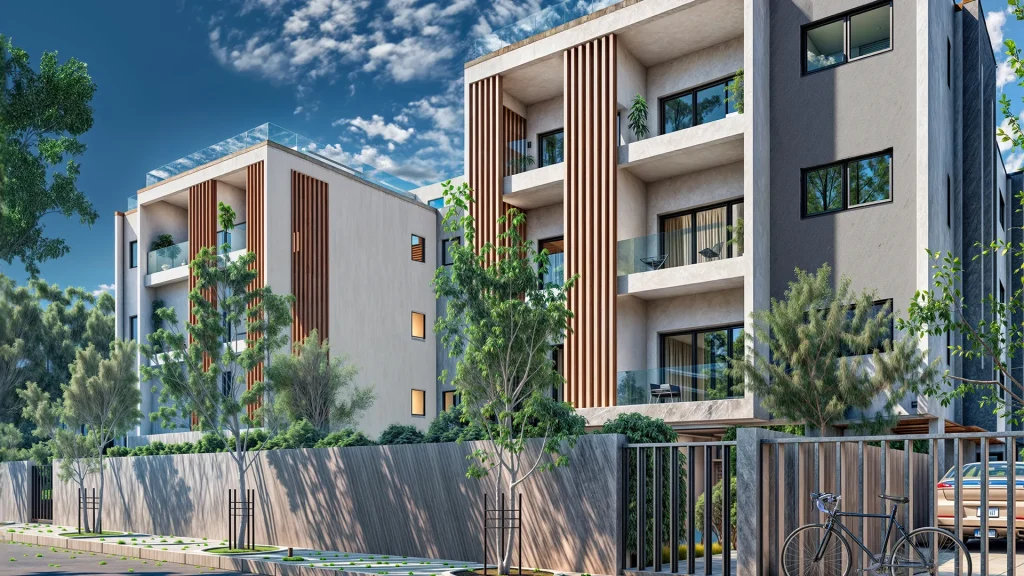
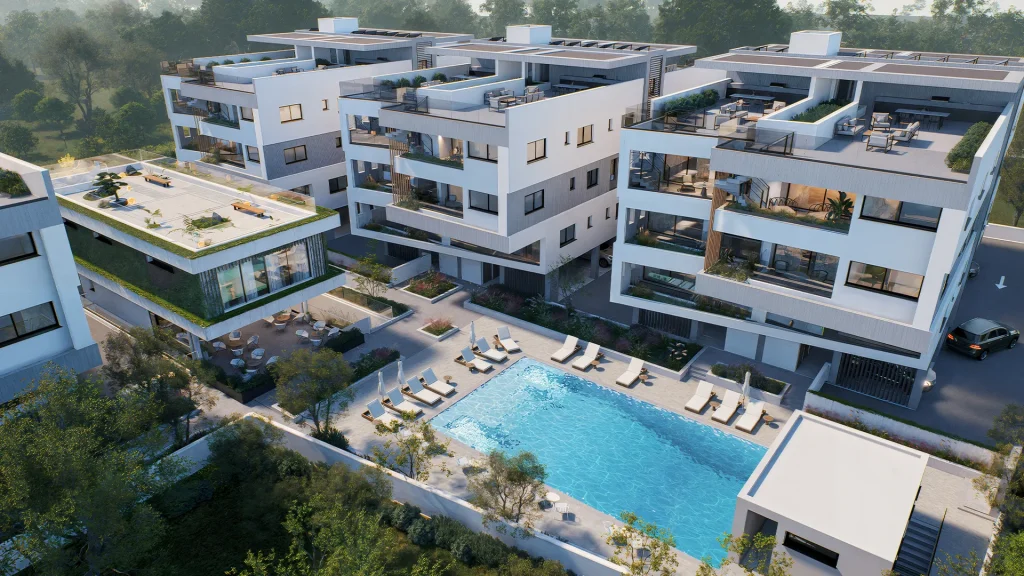
Luma Developers builds in Geroskipou, on the edge of Paphos’ urban core. For a closer look at where the district’s growth is likely to concentrate next, see Luma’s outlook on how the Paphos property market may evolve over the next few years.
This article is for general informational purposes only and reflects publicly available data at the time of writing; property investment decisions should be confirmed with a licensed advisor.
FAQ – Frequently Asked Questions
What rental yield can investors expect in Paphos?
Nationally, gross rental yields stood at 5.44 percent for apartments and 5.67 percent for holiday apartments in the first quarter of 2026, according to the RICS Cyprus Property Index with KPMG in Cyprus. No official source publishes a Paphos-specific yield split, so actual returns will vary by location, property type and management costs.
Is Paphos still a good long-term investment, given that growth has slowed?
Yes. Paphos apartment prices rose 6.4 percent year-on-year in the first quarter of 2026, a more moderate pace than the 13.6 percent spike at the end of 2025, while Paphos house prices are outperforming every other district in Cyprus. That combination, cooling apartment growth alongside accelerating house prices, points to a market finding a steadier footing rather than losing momentum.
Does construction quality affect a property’s investment potential in Paphos?
It affects resale value more than any single design feature does. Confirming planning permits, structural specifications and a clear delivery timeline before purchase matters more for long-term value retention than finishes or floor plans alone.
What are the main risks of investing in Paphos real estate?
The clearest are moderating price growth, rising construction costs linked to labour shortages in the building sector, and credit standards on housing loans that banks expect to tighten slightly through mid-2026, even as interest rates ease.
How does Paphos compare to Limassol and Larnaca for investment?
Paphos leads on foreign buyer concentration and house price performance, while Limassol and Larnaca currently move faster on apartment and overall price growth. A full district-by-district breakdown is available in Luma’s Cyprus property market breakdown.
What should I check about a developer before buying in Paphos?
A clear planning permit, a transparent delivery timeline and a verifiable track record matter more than marketing claims. Due diligence on the seller is as important as the numbers on the district.